
Brexit and UK–Spain Relations
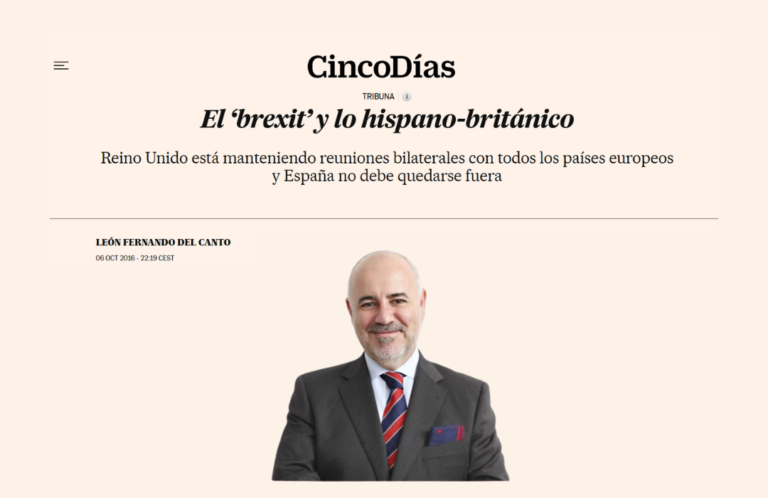
Brexit has fundamentally altered the United Kingdom’s relationship with Europe. Beyond the formal withdrawal from the European Union, the UK has embarked on a process of redefining its international ties through bilateral engagement with individual European states. This strategy reflects a pragmatic recognition that political, economic and legal cooperation cannot be suspended simply because institutional membership has changed.
In this evolving context, bilateral dialogue has become a central tool of UK foreign policy. The United Kingdom has initiated conversations with multiple European countries to address trade, investment, regulatory alignment and strategic cooperation. Spain, however, risks being underrepresented in this new framework unless it engages proactively.
Why Bilateral Engagement Matters
Bilateral relations now play a more prominent role than ever before. Issues that were previously addressed within EU institutions increasingly require direct, country-to-country coordination. This shift affects not only diplomacy, but also business, taxation, mobility, financial services and legal cooperation.
For Spain, maintaining a strong bilateral relationship with the UK is particularly important given the depth of existing ties: trade flows, investment, tourism, residency of nationals and cross-border legal matters all point to a relationship of strategic significance. Failing to engage actively at this stage could result in diminished influence over decisions that directly affect Spanish interests.
The Legal and Economic Dimension
From a legal and economic perspective, Brexit has introduced new layers of complexity. Regulatory divergence, customs arrangements, professional recognition and dispute resolution mechanisms must now be addressed through bespoke agreements and ongoing dialogue.
Lawyers, businesses and institutions on both sides require clarity and predictability. Bilateral talks offer an opportunity to mitigate uncertainty by establishing frameworks that preserve legal certainty, protect economic activity and facilitate cooperation in areas such as financial services, taxation and commercial law.
At DelCanto, we see this moment as critical for ensuring that legal frameworks evolve in a way that supports continuity while adapting to the post-Brexit reality.
Spain’s Strategic Interest
Spain has compelling reasons to take an active role in bilateral engagement with the UK:
The UK remains one of Spain’s key economic partners.
A significant number of Spanish citizens live and work in the UK, and vice versa.
Spanish businesses maintain substantial investments in the UK market.
Legal cooperation is essential for addressing cross-border disputes, regulatory compliance and mobility issues.
Remaining passive while other European countries engage directly would risk placing Spain at a strategic disadvantage. Active participation ensures that Spanish priorities are articulated, understood and reflected in bilateral arrangements.
From Institutional Comfort to Strategic Initiative
The post-Brexit environment requires a shift in mindset. Reliance on multilateral EU structures alone is no longer sufficient to safeguard national interests. Instead, countries must complement EU-level coordination with direct diplomatic and legal engagement.
This is not a departure from European cooperation, but an adaptation to a more complex and plural diplomatic landscape. Spain’s engagement with the UK should be confident, structured and forward-looking, recognising the mutual benefits of continued collaboration.
The Role of the Legal Profession
Legal professionals have a crucial role to play in this process. Lawyers act as intermediaries between political decisions and practical implementation, advising clients, shaping contractual frameworks and anticipating regulatory developments.
At DelCanto, we believe that informed legal analysis and strategic counsel are essential to navigating UK–Spain relations in the post-Brexit era. The profession contributes not only by interpreting the law, but by helping institutions and businesses adapt intelligently to change.
Conclusion: A Necessary Seat at the Table
Brexit has not diminished the importance of UK–Spain relations; it has reshaped them. As the UK advances its bilateral agenda across Europe, Spain must ensure that it has a seat at the table, participating actively in dialogue that will shape economic, legal and institutional cooperation for years to come.
At DelCanto, we advocate for proactive engagement, legal clarity and strategic foresight. In a post-Brexit Europe, relevance is not automatic — it is earned through participation, dialogue and informed action.