
Justice Is Feminine, Its Exercise Is Masculine
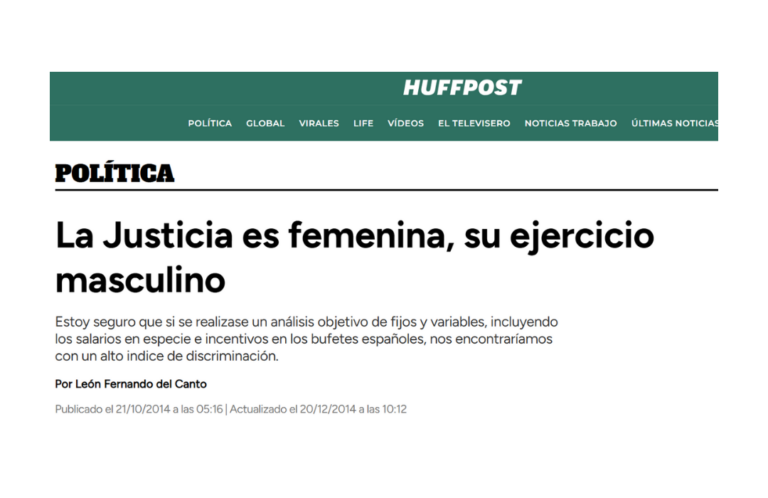
Justice has always been represented as feminine. From Roman times to the present day, Justice has been depicted as a woman. This symbolic choice is neither accidental nor arbitrary. It reflects an idea that has endured for centuries: justice is associated with balance, moderation, fairness and restraint.
A Masculine Structure of Power
However, while justice has traditionally been personified as female, the institutions that administer it have historically been dominated by men. Courts, law firms, governing bodies and positions of authority within the legal system have long reflected a predominantly masculine structure. This contradiction invites reflection on the meaning of justice and the way power is exercised within the legal profession.
Beyond Gender: A Way of Exercising Authority
Describing justice as feminine does not mean attributing it to biology or reducing it to gender stereotypes. Rather, it refers to a way of exercising authority that prioritises proportionality over force, listening over imposition, and reason over dominance. Justice does not impose itself through violence or fear; it persuades through legitimacy and balance.
Empathy, Mediation and Legal Balance
Women have traditionally been associated with care, mediation and empathy — qualities that are not weaknesses, but essential elements of a just legal order. Justice requires the ability to weigh interests, understand context and consider consequences. It is not about winning at all costs, but about restoring equilibrium.
Women in the Legal Profession
In recent decades, women have entered the legal profession in increasing numbers. In many jurisdictions, they now represent a majority of law graduates and a significant part of the profession. Yet this numerical presence has not always translated into proportional representation in leadership positions or decision-making bodies.
Equality and Structural Transformation
The challenge, therefore, is not only one of access, but of transformation. If women are required to adapt to traditionally masculine models of authority in order to succeed, the deeper meaning of equality is lost. Justice does not become more just simply by changing who occupies positions of power, if the underlying logic of that power remains unchanged.