
Brexit and Its Five Exits
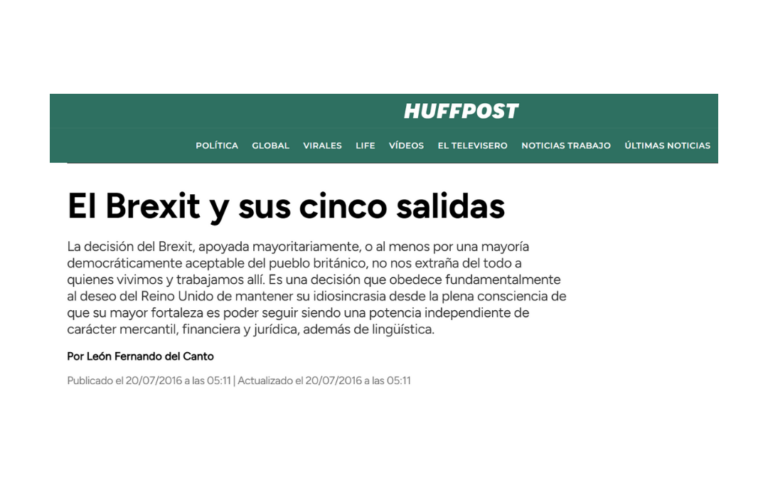
In the protracted saga of Brexit, the greatest challenge has been not simply reaching a decision, but identifying a coherent and sustainable path forward. After years of negotiation, political upheaval and institutional strain, it has become evident that Brexit cannot be reduced to a single binary choice. Rather, it presents at least five distinct exit pathways, each with implications for legal order, economic integration and democratic legitimacy.
These five options are not academic abstractions; they represent real configurations that have been debated in political forums, legal institutions and public discourse across the United Kingdom and the European Union.
1. The “Hard Exit”: Sovereignty Over All Else
The first option — often labelled the hard exit — prioritises sovereign autonomy above all other considerations. Under this approach, the UK would fully reject alignment with EU norms, regulatory frameworks and judicial oversight structures, asserting complete legislative independence.
True to its intent, this model maximises formal sovereignty, but it also imposes significant costs. A hard Brexit would require the wholesale replacement of regulatory frameworks previously embedded in EU law. It would likely disrupt trade, financial services and cross-border cooperation arrangements, creating legal fragmentation and economic uncertainty.
2. The “Soft Exit”: Regulatory Alignment and Managed Separation
In contrast, the soft exit preserves substantial alignment with EU law. It imagines a scenario in which the UK retains access to key parts of the Single Market and, where necessary, continues to incorporate EU standards into domestic legislation.
A soft Brexit relies on managed separation: divergence is gradual, predictable and negotiated. This path seeks legal continuity, offers stability to businesses and preserves many of the cooperative mechanisms that underpin UK–EU interaction.
However, it also entails ongoing commitments to regulatory frameworks whose development remains largely within the EU’s remit — a condition some find politically unpalatable.
3. The “Norway Model”: Access Through Agreement
Another option draws inspiration from the Norwegian arrangement. Under this framework, the UK would participate in the European Economic Area (EEA), gaining access to the Single Market while accepting significant alignment with EU law and mechanisms for dispute resolution.
This model preserves economic proximity and legal coherence, but it requires acceptance of free movement principles and limits on unilateral divergence. Legal practitioners view this arrangement as administratively complex yet functionally robust.
4. The “Swiss Model”: Sectoral Cooperation
A fourth possibility is a sectoral approach, akin to the Swiss experience. Here, the UK would negotiate separate agreements for different economic sectors — finance, transport, energy, data flows — rather than adopting a single comprehensive framework.
This model offers flexibility, but it demands sustained negotiation and creates a patchwork of legal regimes. It emphasises tailored cooperation rather than systemic integration.
5. Reversal or Redefinition: A Return to Closer Ties
Finally, there is the option of partial or full reversal — not a negation of democratic expression, but a strategic redefinition of the UK’s relationship with Europe. This could involve re-entry into certain EU frameworks, re-negotiated membership terms, or hybrid institutional arrangements that restore elements of political and economic cooperation.
This fifth path recognises that legal certainty, economic stability and institutional compatibility may ultimately outweigh the perceived gains of full separation.