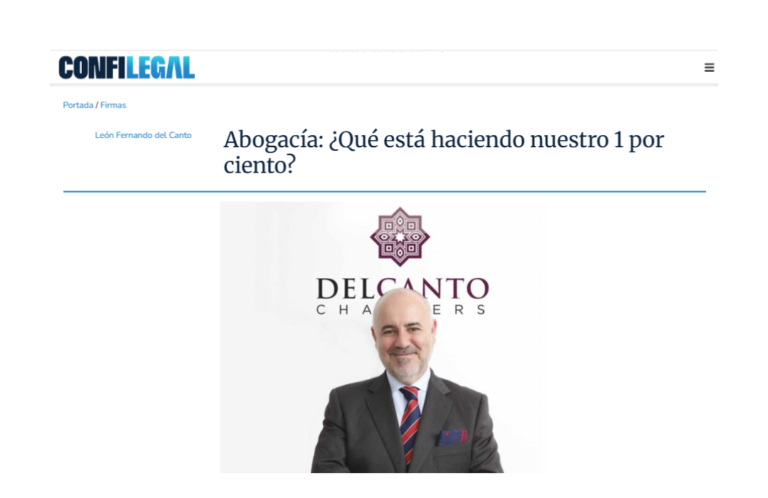
What Is the Top 1 % of the Legal Profession Doing?
At moments of disruption, it is not enough for members of the legal profession to continue with business as usual. We must ask ourselves whether our actions contribute to making the profession socially useful and economically sustainable, or whether they perpetuate perceptions of disengagement and self-interest.
Lawyers collectively bear a responsibility to reflect on our role not just in private client work, but in how we contribute — or fail to contribute — to the broader social good and the resilience of legal institutions.
Beyond Immediate Crisis Response
No one expects lawyers to provide medical solutions to a public health crisis, nor to offer technical insights into epidemiological models or resource allocation. Our role is not to supplant expert public health decision-making, but to bring our professional expertise — reasoning, advocacy and ethical judgement — to bear where it is most relevant.
Unfortunately, too often commentators with broad opinions — whether self-styled experts on all issues or partisan voices — inflame public discourse with speculative assertions that do little to advance understanding or offer constructive solutions.
The Importance of Meaningful Contribution
This raises a central question: what are the most influential voices within the profession — the top 1 per cent — actually doing to contribute meaningfully during challenging times? The answer to this question matters because the public, policymakers and other institutions look to senior lawyers for leadership, guidance and principled engagement when complex issues arise.
At DelCanto, we believe that the profession’s most visible figures — whether in leadership roles, academia or high-profile practice — have a duty to:
offer well-reasoned proposals grounded in legal principle
contribute to public understanding of legal frameworks and rights
engage constructively in debates that affect both the rule of law and civil society
avoid rhetoric that feeds division without advancing solutions
Avoiding the “All-Knowing” Trap
Part of professional maturity is recognising the limits of our own expertise. Lawyers possess deep understanding of the law, ethics and institutional dynamics, but that does not confer omniscience on unrelated fields. A lawyer who speaks beyond their domain with authority — particularly for the sake of visibility — risks diminishing public trust in the profession as a whole.
DelCanto encourages a professional culture in which lawyers contribute where legal expertise genuinely adds value, and in doing so uphold the dignity, responsibility and social relevance of the vocation.
Being Part of the Solution
Ultimately, the question of “what is the top 1 % doing?” is not a rhetorical challenge; it is a call to action. It invites reflection on how the most influential members of the profession use their voice, platform and authority to foster trust, provide clarity, and contribute constructively to society.
For the legal profession to be recognised as part of the solution rather than part of the problem, we must commit to engagement that is thoughtful, principled and impactful — not reactionary, self-referential or performative.
At DelCanto, we uphold the principle that leadership in the profession means contributing meaningfully in service to justice, public understanding and social integrity. This is the standard to which the profession’s most prominent voices should aspire.